
Dollar Week in Review: Euro Rallies to 1.127, Sterling to 1.337
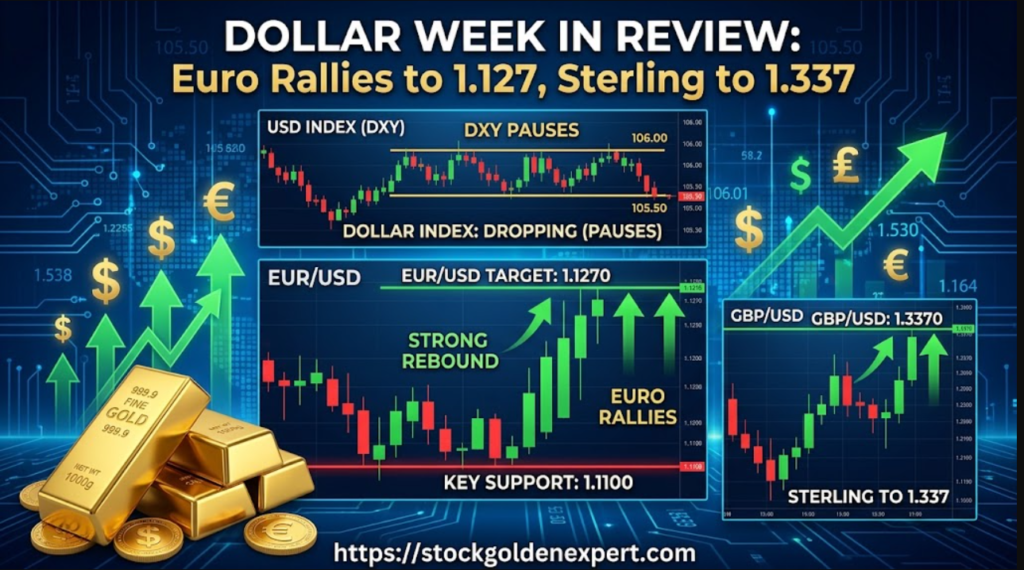
Weekend review: the dollar just posted its worst week since August — and almost nobody noticed, because the drama was elsewhere.
The scoreboard
The euro closed Friday at 1.1244 after touching 1.1273, its highest level since mid-September — a gain of more than a cent from Monday’s 1.1114 low. Sterling was the week’s star, breaking above 1.33 to 1.3371 before settling at 1.3330. Even the yen edged lower against the dollar’s rivals, with USD/JPY flat at 158 but EUR/JPY and GBP/JPY falling as the crosses repriced.
Add it up and the dollar index has given back most of its October surge in five sessions. The driver wasn’t data — US numbers were mixed — but positioning and policy expectations finally meeting: speculative dollar longs were at cycle extremes, and the market had priced zero chance of a Fed cut this year. When positioning and pricing are that one-sided, it doesn’t take much.
What changed underneath
Three quiet shifts. First, Fed speakers this week softened the “higher for longer” chorus, reviving a small probability of a December cut. Second, the eurozone surprised with better industrial data — the first upside surprise in months, and enough to stall the ECB-easing narrative. Third, sterling’s UK inflation print cemented the BoE’s hawkish hold, making the pound the market’s favorite way to express “not dollars.”
Is the dollar trend over?
Not proven. The spring-summer dollar rally was built on real rate differentials that haven’t reversed — US yields are still well above Europe’s. What this week most likely marks is the end of the trend’s easy phase: choppier, two-way trading into year-end, with the euro’s 1.127 and sterling’s 1.337 acting as the new ceilings to beat. A weekly close back above 1.13 in EUR/USD would signal something bigger. Until then, respect the range.
Disclaimer: This is market commentary, not investment advice. Trading FX, commodities, equities and crypto carries substantial risk of loss.
Leave a Reply